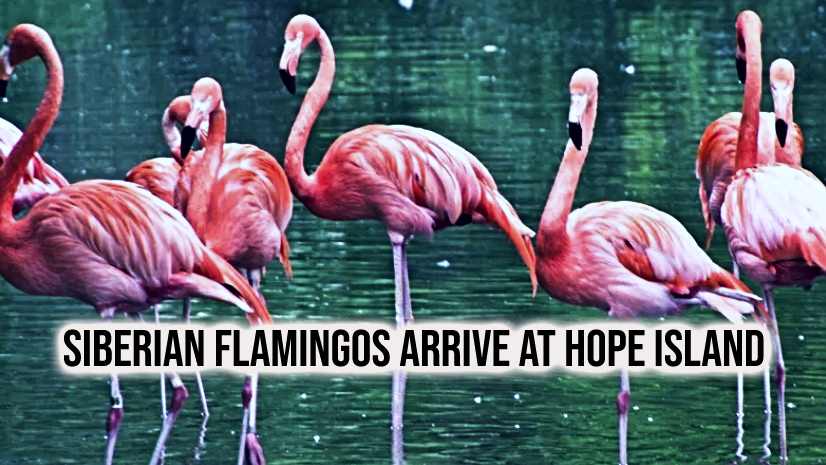
Kakinada ; Around 70 Greater Flamingos were spotted together on Tuesday at the Hope Island area within the Coringa Wildlife Sanctuary limits in Kakinada.
Last year, only a single Greater Flamingo was sighted in this region. In earlier years too, very small numbers of these birds were occasionally recorded in Hope Island, Bhairavapalem, and S. Yanam areas.
Spread across 235 square kilometres, the Coringa Wildlife Sanctuary is home to nearly 35 species of mangroves and about 120 species of rare birds. In addition, as many as 236 species of migratory birds visit the sanctuary and its surrounding areas. Every year, nearly 60,000 water birds flock to this region.
Historically, a large group of Greater Flamingos was first sighted here in 1993. Later, in 2018, about 25 flamingos were recorded. However, this is believed to be the first time that such a large group of Siberian migratory flamingos has arrived in the area.
Flamingos are among the most distinctive bird species in the world. They are tall and elegant birds with long necks and slender legs. Two species of flamingos are predominantly pink in colour. Greater Flamingos are particularly striking with their reddish wings and black-tipped feathers.
What Are Migratory Birds?
Certain species of birds travel from one region or climate to another, usually on a seasonal basis. These are known as migratory birds. Such migrations generally occur in search of better food availability, suitable breeding grounds, favourable climate, and improved living conditions.
While some species migrate short distances, Siberian bird species travel thousands of kilometres. To escape the harsh cold and snow of regions like Siberia, and in search of food and breeding habitats, several migratory birds travel to the warmer coastal regions of Andhra Pradesh. Flamingos are one such species.
Prominent migratory birds visiting Andhra Pradesh include Painted Storks, Spot-billed Pelicans, Glossy Ibises, Purple Moorhens, and Open-billed Storks. Nearly 50 bird species, including endangered birds such as the Great Knot and the Indian Skimmer, migrate to the Pulicat Lake region of the state.
Distinctive Appearance
Flamingos are known for their bright pink plumage, long legs, and S-shaped necks. They are commonly found near lakes, freshwater ponds, and wetlands across Africa, Asia, Europe, and the Americas.Their diet mainly consists of shrimp, snails, and small insects. Flamingo chicks are grey or white at birth, but gradually turn pink due to carotenoid pigments obtained from their food.
There are six species of flamingos worldwide. They live strictly in groups and are often seen resting on one leg in water. Flamingos can fly at high altitudes and cover long distances. They have an average lifespan of up to 70 years. When the female lays an egg, both partners share the responsibility of incubation.
Tourism Potential
Regions that receive Siberian Flamingos often develop into major tourist destinations.
Chilika Lake, India’s largest coastal lagoon, is a paradise for migratory birds, including thousands of pink flamingos. Every winter, large numbers of flamingos arrive here, attracting lakhs of tourists.
Pulicat Lake, located on the Andhra Pradesh–Tamil Nadu border, is India’s second-largest brackish water lake and is another major flamingo habitat.
The Rann of Kutch in Gujarat, a vast white salt desert, provides temporary winter shelter to these elegant birds in its mudflats and wetlands.
In Mumbai, the Sewri Mudflats serve as a major refuge for flamingos. The Thane Creek Flamingo Sanctuary, located near the city’s outskirts, offers a peaceful retreat amid bustling urban life.
Bhigwan, about 100 km from Pune, is also considered a haven for flamingos. All these locations are now evolving into popular eco-tourism centres.
Hope Island’s Fortunes Rise
The arrival of a large number of Greater Flamingos this year clearly indicates that Hope Island and the Coringa Sanctuary region provide favourable habitats for migratory birds. If adequate arrangements are made for bird watching and eco-tourism in the coming years, these areas have the potential to develop into major tourist destinations.
At the same time, the government must take appropriate measures to ensure conservation and protection of the sanctuary in line with this development.